
What is power factor correction?
Power factor is simply a name given to the ratio of “actual” power (active power) being used in a circuit, expressed in watts or more commonly kilowatts (kW), to the power which is “apparently” being drawn from the mains, expressed in volt-ampere or more commonly kilo volt-ampere (kVA).
P.F. = Active Power (kW) / Apparent Power (kVA)
All modern industries utilise electrical energy in some form or other. Two basic categories of load are encountered in alternate current (AC) networks.
1. Resistive Loads
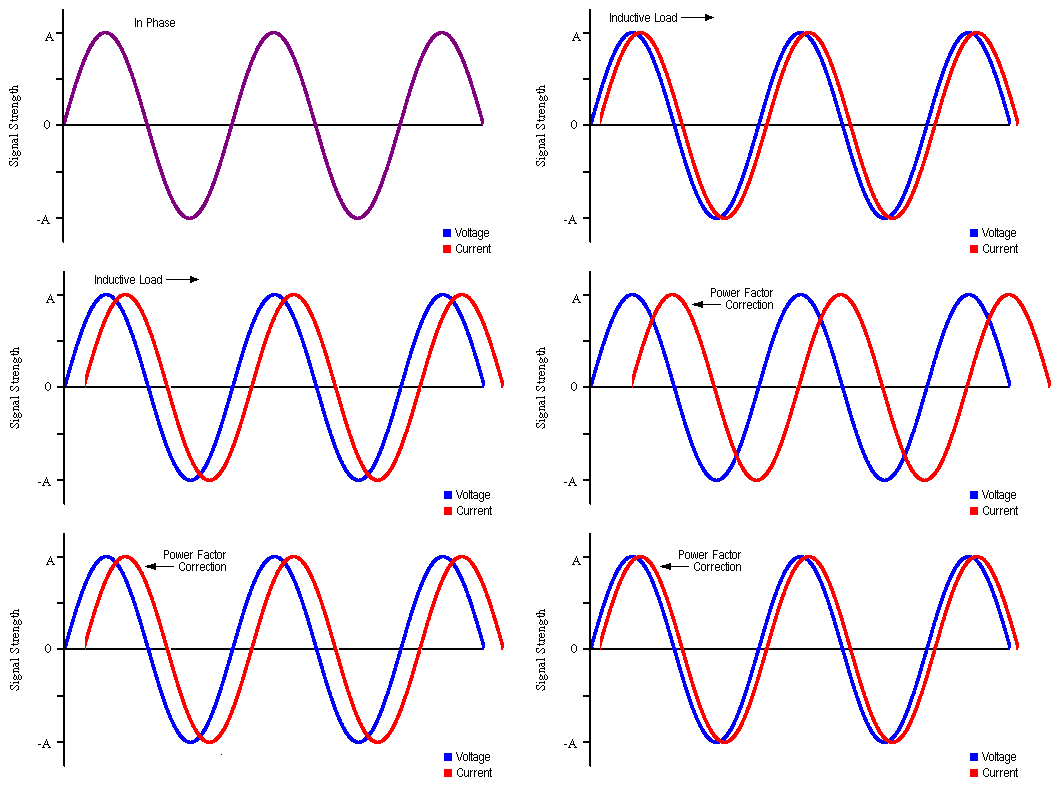
Devices containing only resistance e.g. incandescent lamps, heaters, soldering irons, ovens, etc. The current drawn from the supply is directly converted into heat or light. Since the voltage is assumed to be constant, the actual power (kW) being used is identical to the apparent power (kVA) being drawn from the line. The power factor is therefore unity or 1. In these purely resistive circuits, the current and voltage sinewave peaks occur simultaneously and are said to be “in phase”. KVA2 KVA1
2. Inductive Loads
All motors and transformers depend on magnetism as the basis of their operation. Magnetism is a force and in the physical sense is not consumed. In AC motors and transformers, magnetic forces are only required periodically. Consequently, a permanent magnet cannot be used and the necessary magnetism is produced by electrical means. The electrical current needed for this purpose is not fully utilised. Having produced the magnetic force, the current flows back to the power station again. This current is called the reactive current in contrast to the active current which performs work and is fully utilised in so doing. Although the reactive current is not utilised, it imposes a load on the electrical distribution system and supply authorities demand payment for this load according to specific tariffs.
The current drawn from the supply is made up of two separate kinds of current “power producing current ” and “magnetising current ”. Therefore the current flowing in an AC circuit (unless corrected) is generally larger than is necessary to supply the power being by the expended point.


 Incredible Engineering