
HARMONICS
What are harmonics?
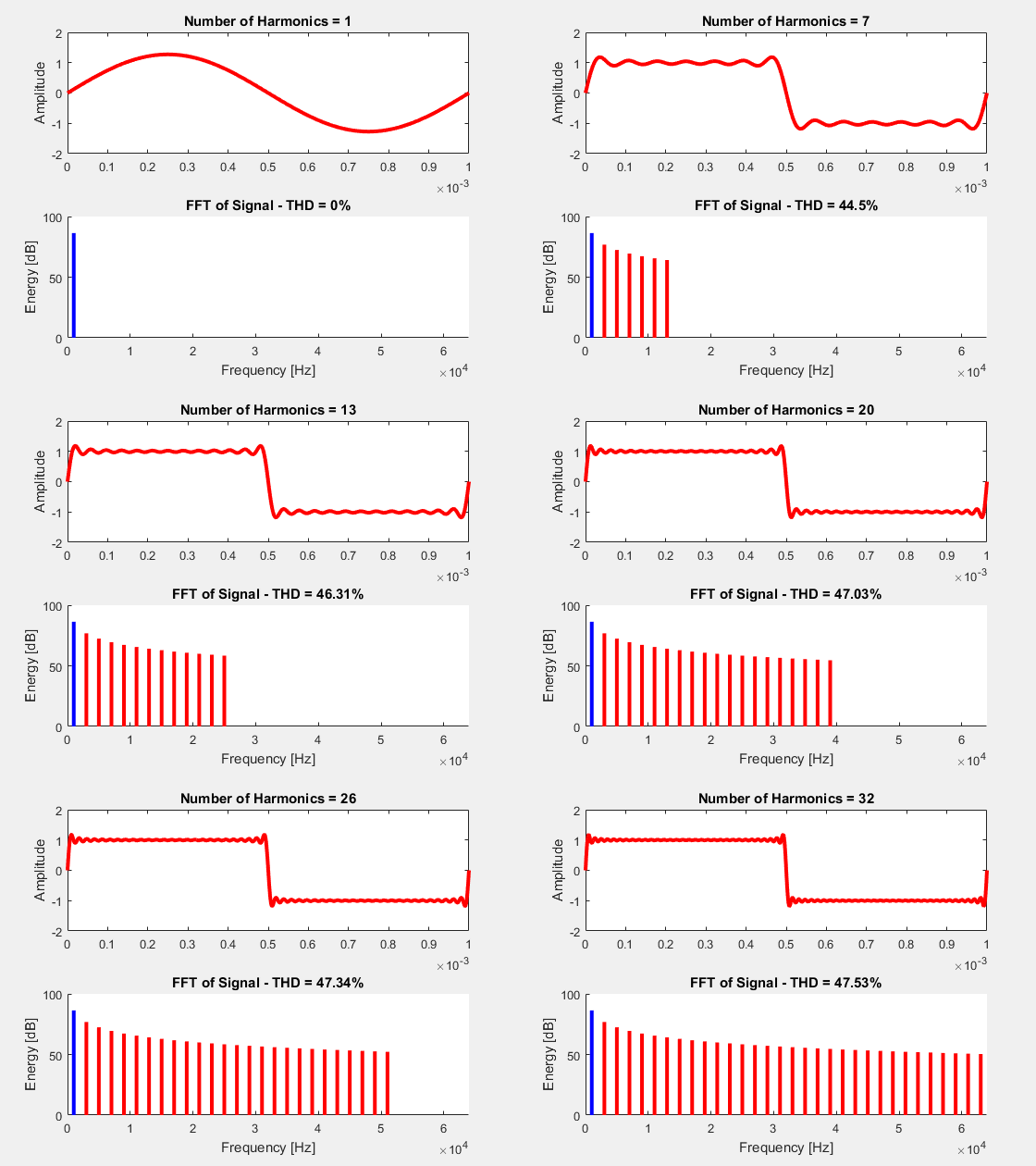
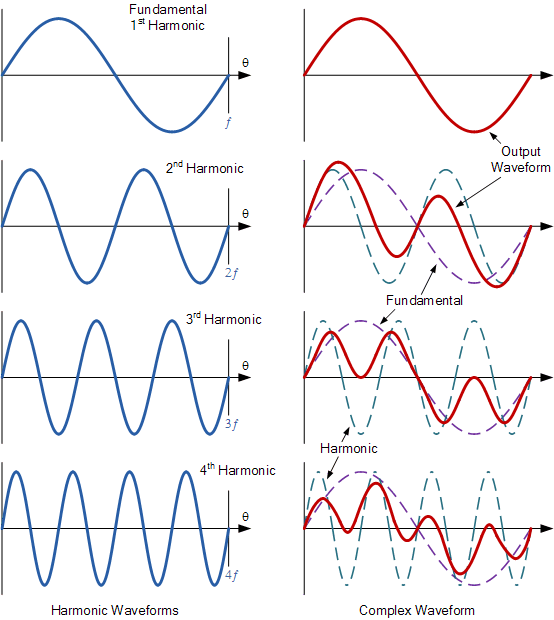
Harmonics are undesired signals which are present in electrical networks that have a frequency multiple of the fundamental: as they overlap they create a new distorted wave shape which is no longer sinusoidal.
Most modern factories are making increasing use of modern power electronics. A feature of semi-conductor controlled devices and drives is to generate a high content of harmonics in the mains. The result is that resonance occur which leads to dangerous excess currents which overload capacitors, cables, fuses and especially contactors.
Harmonics do not originate from power generators but are produced by non-linear loads which can be divided into three main groups:
• Loads with variable impedance i.e. arc furnaces, fluorescent lighting, etc.
• Loads with saturated magnetic circuits i.e. reactors, saturation transformers, induction furnaces, etc.
• Loads that make use of semi-conductor devices i.e. static rectifiers, static frequency converters, static uninterruptible power supplies, static induction regulators.
Non-linear loads are therefore typical harmonic generators.
Harmonic currents are load independent and are caused by the harmonic generator which is dependent on the phase angle of the power supply. The frequencies occurring form multiples of the mains rated frequency, since impedance of the line system rises during increased frequency (whereas te impedance of capacitors falls). The harmonic current flow through capacitors installed in the vicinity of the harmonic generator.
As a remedy each capacitor can be in series with a reactance. The inductance is so designed that series resonance frequency below the 5th harmonic results. Usual values are 189 Hz or 205 Hz. The capacitor / reactance combination is inductive at any frequency above the series resonance. Consequently, a resonance between mains reactance and capacitor can no longer occur at a higher mains harmonic.


 Incredible Engineering